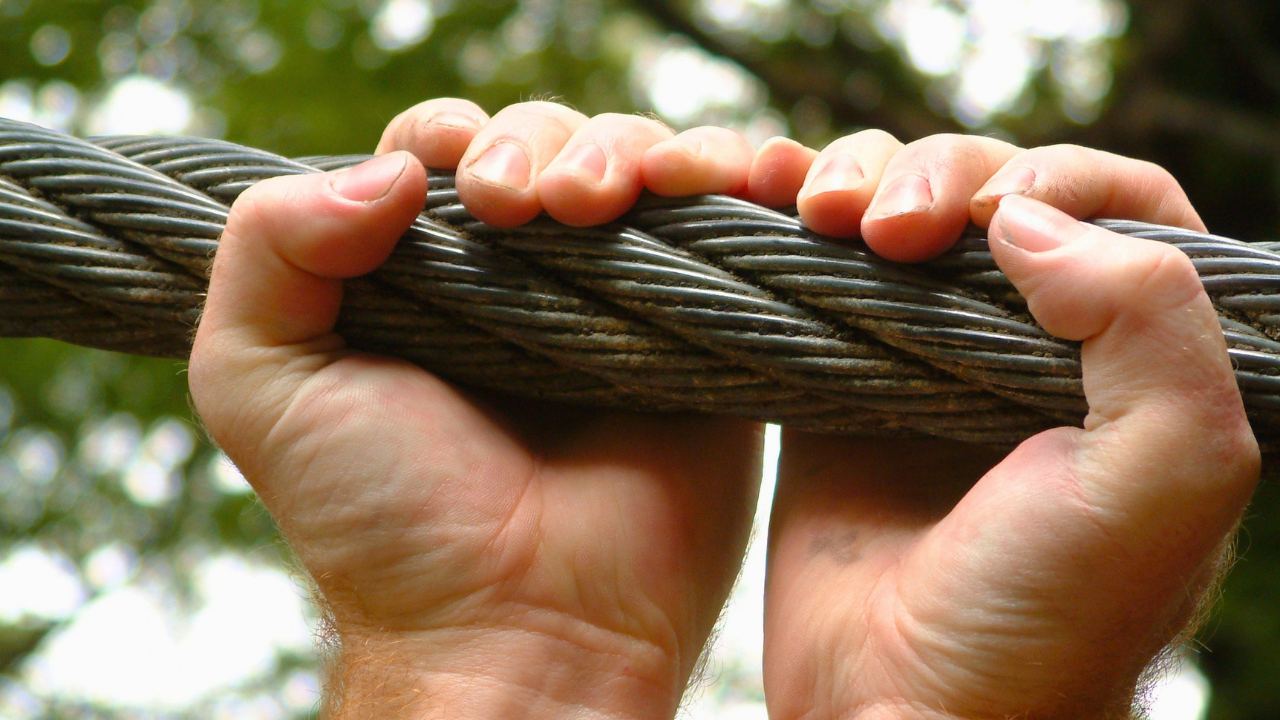
Why Grip Strength Predicts How You'll Age
Oct 12, 2026Doctors don't usually ask you to squeeze a dynamometer for fun. Grip strength turns out to be one of the more quietly powerful predictors researchers have found for how someone ages, and most people have never trained it on purpose in their life.
It's not really about your hands. Your grip is a window into your whole neuromuscular system.
The Research Behind This Is Bigger Than You'd Expect
A massive international study following over 140,000 adults across 17 countries found grip strength was a stronger predictor of all-cause mortality and cardiovascular events than systolic blood pressure, one of the standard markers doctors already track closely (Leong et al., 2015, The Lancet). That's not a small claim, and it's part of why grip strength has become a serious research focus over the last decade.
Why Your Hands Specifically
Grip strength isn't magically important on its own, it's an easy-to-measure proxy for your overall muscle mass, nervous system function, and general physical resilience. Weaker grip strength in midlife has been linked to a higher risk of disability in old age, tracked over decades in long-term studies (Rantanen et al., 1999, Journal of the American Medical Association). Basically, if your grip is weak, it's often a sign that a lot of your muscular and neurological system is working with less capacity than it should.
My personal story with grip strength starts shortly after I started working as a graphic designer. I spent so many hours at a computer desk that I developed carpal tunnel. I had to take time to stretch my wrists, forearms, all the way to my chest and upper back. Nowadays my grip is weakened by my cervical spondylosis and pinched nerves in my upper back. And I can attest to my quality of life deteriorating when I have nerve and joint pain. The workouts become seldom, inflammation rises with bad food choices, and it affects my mood, performance, and sleep.
This Isn't Destiny, It's Trainable
Grip strength responds to training the same way any other measure of strength does, particularly compound lifts that require you to hold onto something heavy. Deadlifts, farmer's carries, pull-ups, and rows all build grip strength as a side effect of the actual exercise, and direct grip work, like dead hangs or grip trainers, adds more on top. This is one of the more encouraging pieces of aging research out there, because unlike your birth year, this variable is something you can actually change (Bohannon, 2019, Clinical Interventions in Aging).
What Actually Helps
You don't need to become a powerlifter to move the needle here. Regular resistance training that includes compound lifts and some kind of carrying or hanging work covers most of it. Farmer's carries, a couple times a week, are a simple, low-skill way to build real grip strength alongside core and shoulder stability. If you're already strength training consistently, you're probably already building this. If you're not, this is one more reason to start.
Grip strength won't show up on a scale or in the mirror, which is probably why almost nobody trains it directly. But it's one of the more honest signals of how your whole body is holding up, and it's one of the more trainable ones too.
Or if you're ready to act now, join the 30 Day Reset →
Frank Madore is co-founder of ThriveLife, helping parents build sustainable health without the all-or-nothing mindset. More at thethrive.life.
The ThriveLife Parent Wellness Audit is live.
A free 5-minute tool that shows you exactly where you're leaking energy as a parent — and what's actually worth fixing first.
Six pillars. Honest scoring. No generic advice. Just a clear picture of where you actually are and a specific direction forward. Takes 5 minutes. Free.